
Animals could soon replace the faces of historical figures on UK banknotes, the Bank of England announced last week. The proposal has sparked varied reactions; while wildlife experts welcomed the idea, British politicians voiced strong opposition.
Now, the animal welfare charity RSPCA has joined the conversation, sharing playful banknote mockups featuring some of the often-misunderstood animals they would like to see represented.
For more than 50 years, historical figures, such as wartime prime minister Winston Churchill or nurse Florence Nightingale, have been featuring on British banknotes. But the Bank of England has begun work on a new line of banknote designs that are harder to counterfeit and make denominations easier to distinguish.


The decision to focus on wildlife came after a consultation held last July, where the public shared themes they would like to see on future banknotes. Wildlife emerged as the clear favourite, with roughly 60% of respondents choosing it as one of their preferred options, while only 38% selected historical figures.
Other themes included architecture and landmarks (56%), arts, culture and sport (30%), innovation (23%) and noteworthy milestones (19%).
The Bank of England has welcomed the results, with chief cashier Victoria Cleland calling nature "a great choice from a banknote authentication perspective". However, the idea has drawn criticism from some politicians.
Conservative leader Kemi Badenoch has called putting animals on banknotes "a silly thing to do", adding: "removing Churchill from banknotes is erasing our history ... I absolutely do not support it." And Liberal Democrat leader Ed Davey said: "I can't think of a worse time to do this with a war waging in Europe."


Nature campaigners and wildlife experts, meanwhile, have praised the announcement. Activist and birdwatcher Nadeem Perera has called the decision "overdue and significant", while Scottish nature activist Gordon Buchanan underlined the importance of spotlighting nature.
"Nature is more than just scenery," he said. "It is the living thread that binds our landscapes, our history, and our future together. To protect nature is to protect the quiet, resilient heartbeat of the land itself."
The RSPCA has also entered the debate, with a series of mockups, released with the permission of the Bank of England, showcasing some of the "undervalued" animals in the UK. The £5, £10 £20 and £50 notes each show a pigeon, a fox, a seagull and a rat – animals often dismissed for being messy, unhygienic or a nuisance.
"These notes are a bit of fun, but we hope they will bring to life how our money could look when celebrating the wild animals we share our towns, cities and countryside with," said Geoff Edmond, RSPCA wildlife expert.


"Pigeons, foxes, gulls and rats often split opinion and are even unfairly labelled as pests by some. But they are all fascinating wild animals in their own right and deserve recognition, too."
A further public consultation this summer will invite people to suggest which species should appear on the new banknotes. The RSPCA hopes that some of the more underrepresented species will make the shortlist drawn up by an expert panel that includes Nadeem and Gordon.
"The consultation will be a great opportunity to have a big discussion about nature and wildlife, change perceptions of some species, and develop the nation's collective love and fondness for wildlife of all shapes and sizes," Geoff added.
The new banknote series is expected to take several years to develop. As with current designs, it will continue to feature a portrait of the monarch, and the UK's individual home nations will also be reflected in the final designs.
Best wildlife cameras

Wildlife camera features:
- Zeiss imaging, so you can see wildlife in both day and night
- Automatically receive images straight to your phone
- Reliable motion detection
- Weatherproof for outdoor use
- Mounting straps and bracket
- Built-in 4G SIM (for remote image transfer)

Wildlife camera features:
- A 30-megapixel sensor
- Built-in Wi-Fi hotspot
- Automatic day and night monitoring
- Runs on AA batteries for long-lasting power outside

Wildlife camera features:
- 64MP photo/4K video resolution with sound
- 0.2s trigger speed and 5 continuous shooting
- HD colour screen
- 3 capture modes (photo, video, or both)
- Loop recording and IP66 waterproof
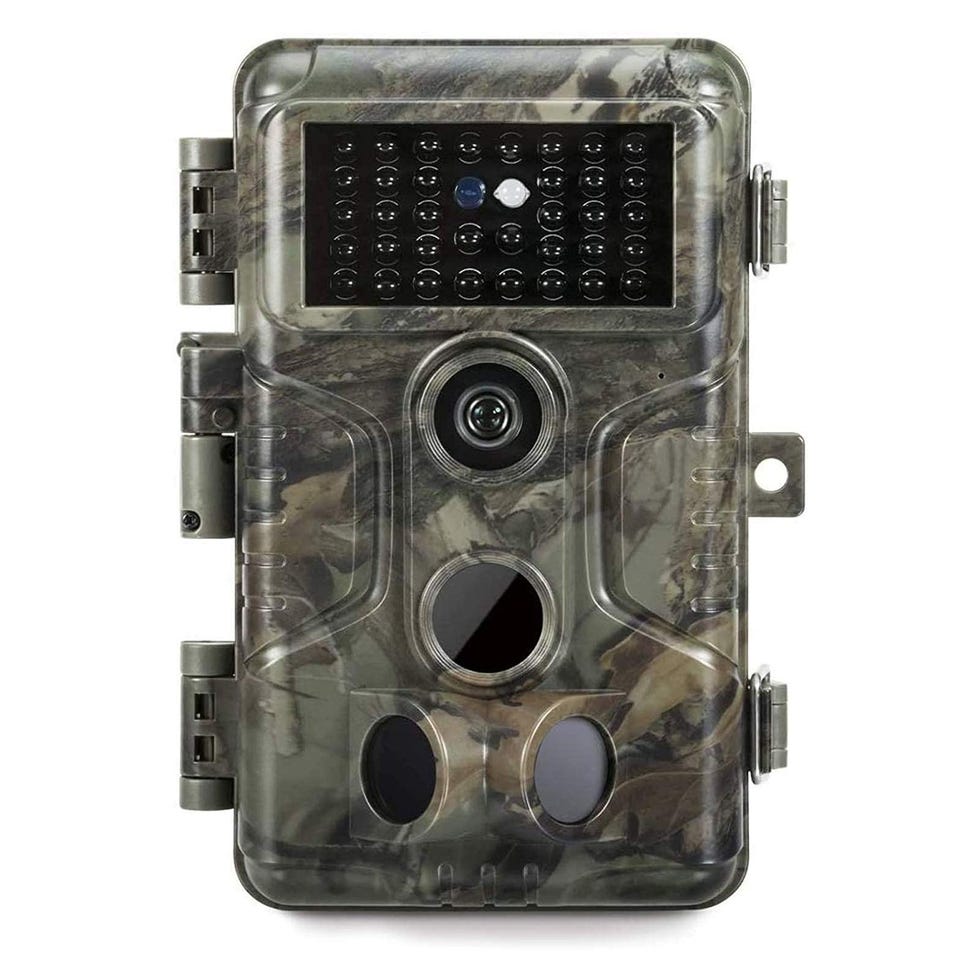
Wildlife camera features:
- 24MP photo/H.264 1296P video resolution with sound
- 0.1s trigger speed
- 2.4” high-resolution colour screen
- 3 capture modes (photo, video, or both)
- Waterproof

Wildlife camera features:
- 20MP photos/1080P video resolution
- 36pcs IR LEDs
- Night vision motion activated
- IP66 waterproof

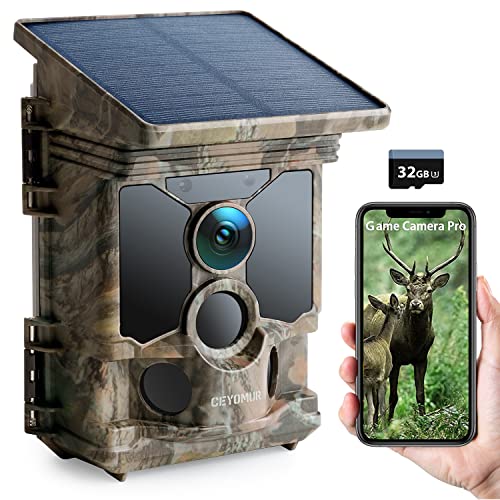
Wildlife camera features:
- 40MP photo resolution
- Solar powered - dual power supply
- WiFi/bluetooth
- 120 degree detection angle
- Night vision motion activated
- IP66 waterproof
- U3 32GB Micro SD Card

Wildlife camera features:
- Close focus at 35cm
- Ultra-high-definition
- Large field of view of 100 degrees
- Compact and lightweight
- Night vision
- Reliable app connectivity
Wanda Sachs is the Multiplatform Writer for Country Living and House Beautiful, exploring the latest in gardening, wildlife and sustainable living alongside interiors and property. She is particularly interested in human-interest stories, the intersection of design and pop culture, and the evolving relationship between urban and rural life. Previously, she served as Associate Editor at The Berliner in Berlin, where she reported on culture and fashion. Wanda studied English and German at the Goethe University Frankfurt and Exeter University.


