Country Living editors select each product featured. If you buy from a link, we may earn a commission. Why Trust Us?


9 Thrift Store Items That Can Look Cheap, But Are Actually Worth Serious Cash
You may not realize how valuable this stuff can be.
From treasured kitchen collectibles to childhood toys worth a small fortune, you never know what a trip to your local thrift store might turn up. So it pays to really sift through those shelves! The next time you’re at your local Salvation Army or Goodwill, keep your eyes peeled for these nine potentially high-value vintage pieces. Should you spot any, be prepared to (literally) add to cart—you may have just found the golden ticket!
More high-value items to hunt for while thrifting:
Colored Pyrex

From 1915 until the late 1980s, Pyrex produced somewhere between 100 and 200 different pattern lines. Some ran for decades, while other “promotional” lines, offered around gifting seasons or to commemorate special occasions, only lasted for a season or two. These days, a complete set of Pyrex mixing bowls can fetch around $500, while a recent thrifting trip turned up a $400 fridgie set. Rarer pieces of promotional pyrex, as well as prototypes that never made it into production, can be worth thousands.
RELATED: Everything You've Ever Wanted to Know About Collecting Vintage Pyrex
Silverware

Keep your eyes peeled for precious metal hiding in the flatware. Real silver will usually look tarnished (but you can polish it with water and baking soda!) and make a ringing sound if you tap it. Snapping up an entire set or finding brand names like Tiffany or Gorham can also add more value.
RELATED: 5 Antiques Hiding at Grandma's House Randomly Worth a LOT of Money
Jadeite

Seeing green? Mint-colored dishware dates back to the '30s, but the style erupted in popularity after World War II. Spot McKee, Jeannette or Fire King logos on the bottom and you might be holding the real deal. A single butter dish could be worth upwards of $100.
RELATED: The Collector's Guide to Jadeite, Complete With Resale Values
Vintage Luggage Sets

Between the 1940s and 1960s, long-distance travel transitioned from trains to automobiles and airplanes, and lighter handheld suitcases replaced hefty steamer trunks. Today, sought-after vintage styles include pinstripe luggage from OshKosh (center right) and Samsonite’s white-trimmed “Shwayder Bros.” line (pink and teal), which was named for the company founders. Multipiece sets can fetch up to $700, while individual cases range from $40 to $250, depending on size and condition.
RELATED: The Collector's Guide to Vintage Luggage, Complete With Resale Values
Vintage Canning Jars

These humble glass pieces were designed for putting up fruits and vegetables in the days before refrigeration. John L. Mason secured the first patent on the design in 1858, but other glass companies such as Atlas, Hazel, Kerr, and, of course, Ball, released their own versions when it expired 20 years later. Newer versions work wonderfully for everything from crafts to cocktails, but certain styles from the mid-1800s to the 1920s can command up to $500!
RELATED: Can You Spot the $500 Mason Jar?
Depression Glass

By 1929, with the arrival of a machine that automatically pressed glass, Hocking became the largest producer of what we now call Depression Glass, inexpensively produced but elegant glassware that sold for about 4 to 25 cents apiece. The “Miss America” pattern (shown here), was produced between 1935 to 1937. Today, a complete service for eight can go for up to $1,000, depending on the color. Yellow and amber depression glass is the most widely available; ruby red is much harder to find, and beware that cobalt blue pieces are often reproductions.
RELATED: 5 Vintage Dishes Grandma Loved That Are Worth Serious Cash Today
First Edition Books

Original or signed versions of beloved books can obviously get flipped if you connect with the right fans. Plug the title into AbeBooks.com to get a rough estimate of what your classic is worth.
Elaborate Frames

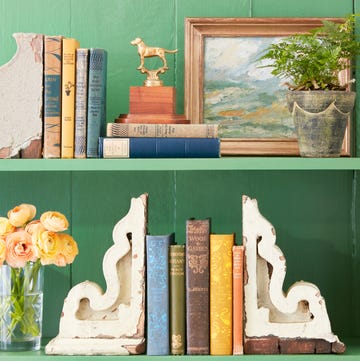
You might not love the painting itself, but don't ignore an artwork's frame. Ornate or antique-looking borders can out-value the piece inside and sell well online. Of course some quick research on the artist isn't a bad idea either — it netted one woman over $27,000.
Perpetual Calendars

Patented as an automatic wristwatch mechanism by Patek Philippe in 1889, perpetual calendars display a properly paired weekday and date, no matter the year. Manual versions became popular desktop accessories in the early 1900s and are seeing a resurgence today thanks to younger generations’ penchants for flip phones and other analog devices. The stately Edwardian wooden turn knob styles (bottom left) of the era can cost up to $1,000, while midcentury brass pieces run $50 to $200.
RELATED: 10 Antiques and Vintage Collectibles in Huge Demand in 2025


5 Art Deco Finds to Thrift Right Now

Lainey Wilson Shows Off Stunning Thrift Store Find

6 Vintage Dishware Patterns To Thrift This Fall

7 Thrift Store Items That Look Valuable But Aren't