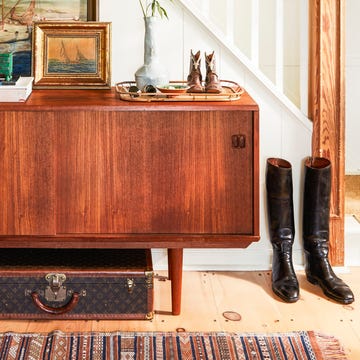
Lake houses have a specific visual vernacular—where everything feels delightfully worn in and speaks to an old-school, old-money Americana—that can be hard to replicate for the uninitiated. Regardless of whether you want to lean into timeless or go for something a little more funky, there are a few key elements every lake house needs to feel complete.
As Country Living’s deputy homes editor, I’ve spent years covering some of the best-decorated lake houses across the country, and now I’m finally sharing all the secrets so you can craft one of your own. Below, I’m breaking down the five key elements every lake house needs and walking you through how designers incorporate them into every space so you can take on your next decorating project with ease.
The 5 Key Elements of Lake House Style
The foundation of a good lake house is built on each of these long-loved, lived-in elements that have come to define the easygoing style that comes with lakeside living.
1. Materials That Age

Even new lake houses should feel a little old, and the materials used in new builds and remodels alike should age gracefully over time—think classics like knotty pine walls, beadboard paneling in an entryway, and wonky wood floors scattered throughout. Together, these timeworn textures create a relaxed, rugged foundation on which to build.
RELATED: Knotty Pine Is the Only Trend You Should Be Paying Attention To
How Designers Do It...

Wood paneling has made a major comeback in recent years, so lean into it wherever you can. If you’re looking to add rusticity in unexpected places, opt for a designer-loved paneled backsplash in your kitchen instead of tile.
RELATED: This Surprising Kitchen Trend Is Making Designers Ditch Tile
2. Palettes That Feel “Of the Place”

The best lake houses look stumbled upon—a part of the landscape, not separate from it. A lot of that charm comes from the colors used inside and out. The shades are drawn from nature—leafy greens, sunny yellows, watery blues, and berry reds. Together, they build a palette that is at once approachable and elevated.
How Designers Do It...

For the exterior, look for shades that fade into the tree line—think dark greens and blues. (Designers and architects alike love Urbane Bronze by Sherwin-Williams for woodsy exteriors.)
Inside, stick to wood tones accented by yellows, greens, reds, and blues. Look for unexpected places, like floors and small powder rooms, to add color and whimsy with paint. A green-painted porch floor is always welcome, as is a powder room drenched in sunshine yellow. But don’t feel like you have to shy away from white walls. If you love the crisp look of creamy paint, lean into color through textiles and decor.


RELATED: Experts Say These 5 Paint Colors Will Dominate in 2026
3. Sit-and-Stay Silhouettes

No lake house seating should feel precious. Everything should stand up to what I’ve dubbed the “bathing suit test”—the idea that you could kick back on a chair or sofa in a half-wet bathing suit while eating a drippy ice pop and not ruin the upholstery. If your furniture can’t pass that test, then you’re better off passing on it.
How Designers Do It...

When picking furniture, prioritize seating with sloped or rolled arms to ensure long lounging sessions stay comfortable. Outdoor-grade pieces made from wicker or rattan make for an especially chic choice indoors, and be sure to pick performance fabrics that can stand up to the wear of waterside, sunscreen-laden living.
RELATED: Our Definitive Guide to Sofa Styles
4. Textiles With History

Good design tells a story, and that often begins with pieces that have their own. Vintage furniture easily adds depth to the visual narrative, but so do textiles—and they’re often overlooked as a key building block. Blankets, tapestries, and even pillows can all help you tell the story of your lake house.
How Designers Do It...

Tap into the common design language of lake houses by pulling in designer-loved Hudson’s Bay blankets, as seen above. Camp blankets from historic makers such as Pendleton and Faribault or Welsh and overshot blankets can bring a similar sense of history. Be sure to seek out nearby makers or regional woolen mills for pieces with a unique connection to your local landscape.
5. Subtle Quirk and a Bit of Kitsch

Lake houses shouldn’t be overly serious—they’re, first and foremost, places for relaxation and fun, so your decor choices should reflect that. Don’t be afraid to lean into a bit of kitsch and feel free to go full-on quirky when decorating with antiques.
How Designers Do It...

Walls are the natural place to display your funky finds. A gallery wall filled with thrifted pieces not usually found on walls—think old life rings or even game boards—adds just the right amount of personality. Vintage signage with visible rust also makes for a happily unexpected piece of art. You can even hang a decommissioned canoe from the ceiling for the ultimate statement.
Anna Logan is the Deputy Homes & Style Editor at Country Living, where she has been covering all things home design, including sharing exclusive looks at beautifully designed country kitchens, producing home features, writing everything from timely trend reports on the latest viral aesthetic to expert-driven explainers on must-read topics, and rounding up pretty much everything you’ve ever wanted to know about paint, since 2021. Anna has spent the last seven years covering every aspect of the design industry, previously having written for Traditional Home, One Kings Lane, House Beautiful, and Frederic. She holds a degree in journalism from the University of Georgia. When she’s not working, Anna can either be found digging around her flower garden or through the dusty shelves of an antique shop. Follow her adventures, or, more importantly, those of her three-year-old Maltese and official Country Living Pet Lab tester, Teddy, on Instagram.