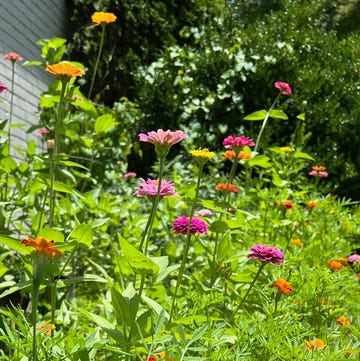
86 Popular Types of Flowers for a Country Garden
How does your garden grow?
One of our favorite features of the blooming months is seeing a garden bursting with flowers in different colors, shapes, and sizes. Whether it's as small as a window-box or a front porch planter welcoming visitors, or as big as a fully planned out backyard garden bursting with life, when flowers are blooming it brings a smile to our faces.
Whether you've got a lot of space or a little, the first step is figuring out what you want to plant. If you're just looking for a quick, no-fuss bloom, you can spread some wildflowers around. But if you're looking for longer-lasting blooms and a mix of annuals and perennials, then it's time to get a little more—ahem—in the weeds with your planning.
Let this gigantic list of flowers help be your inspiration! This mix has it all: long-lived flowering shrubs, tiny delicate blooms (that look great in a flower arrangement), big stunners, easy-to-grow no-brainers, and more.


Always remember, especially when planting perennials, to buy varietals and plants that are right for your USDA Hardiness Zone. (Find your zone here.) And keep in mind that the map was updated not too long ago, with some zones having shifted!
More Great Gardening Stories from Country Living:
Peony

When it blooms: Late spring to early summer
Why we love them: These eye-catching perennials are the queens of the garden with magnificent form and scent. They're extremely long-lived plants, surviving for decades. Don't worry about any visiting ants, which are not hurting the plant but only coming to sip the nectar.
Keep Reading: How to Properly Grow and Care for Peonies
Sunflower

When it blooms: Late summer to early fall
Why we love them: They're fun and come in every color and size from tiny to gigantic! Plus, they're easy to grow from seed, though you may need to protect the seeds and seedlings from birds and rodents with a chicken wire cage formed around them.
Read On: 22 Beautiful Sunflower Varieties to Brighten Your Garden
Snapdragon

When they bloom: Spring to hard frost
Why we love them: These charming annuals will take a little cold, so they can be planted sooner in spring than more tender annuals. Their colors range from white to pale yellow to deep hues of orange, red, and pink.
Keep Reading: How to Grow Snapdragon Flowers
Pansy

When it blooms: Early spring or fall
Why we love them: These charming annuals don't mind a light frost, so they're ideal in early-season plantings. Their pretty little faces can be used to dress up salads and baked goods, too, because the flowers are edible.
Keep Reading: 15 Pretty Edible Flowers for Decorating Your Dinner Plates
Dahlia

When it blooms: Late summer to fall
Why we love it: The sheer number of varieties of dahlias are astounding. You can grow everything from tiny pom pom shaped balls to dinner-plate sized blooms in every color of the rainbow. They're perennial in the South, but the bulbs must be dug up in the fall in northern climates and replanted in the spring.
Read more: How to Care for Dahlias
Black-Eyed Susan

When it blooms: Late summer to early fall
Why we love it: This sunny flower will make you smile, plus it doesn't need babied because it's drought tolerant and blooms for weeks and weeks. Be sure to choose a perennial type if you want it to come back (there are also annual types).
Butterfly Bush

When it blooms: Early summer to late summer
Why we love it: Tons of spikey flowers in pink, purple or white cover this fast-growing shrub. Plus, you'll love seeing all the butterflies that visit! Newer varieties are not invasive.
Keep Reading: 19 Plants That Will Bring Butterflies to Your Yard or Garden
Tulip

When they bloom: Early to late spring
Why we love them: Their stately blooms announce that spring has arrived! Plant the bulbs in the fall, but be aware that they're often iffy about coming back in subsequent years. Treat them as annuals and replant new bulbs the next fall.
Learn More: Are Tulips Perennials—or One and Done? We Asked the Experts
Coneflower

When it blooms: Early to late summer
Why we love it: These perennials are super-tough and drought-tolerant. Coneflower (a common name for echinacea) comes in an array of bright and beautiful colors from lime green to hot pink and deep red. The dried flowers can be used for tea or medicinal purposes.
Keep Reading: 8 More Miraculous Medicinal Plants
Clematis

When it blooms: Spring to late summer
Why we love it: Clematis is a beautiful vine for fences, arbors, and lamp posts. But be patient: it often takes perennials such as clematis several years to get established.
Read more: How to Plant and Grow Clematis
Lavender

When it blooms: Summer
Why we love it: This incredibly-scented perennial is gorgeous when planted in large swaths. Make sure you choose a variety that will survive winters in your region.
Read more: How to Grow Lavender
Nasturtium

When they bloom: Summer
Why we love them: These cheery flowers come in fiery shades of red, orange, and yellow, hot pink and salmon. The pretty round leaves and the flowers are edible, too, so toss them on salads and or use them to decorate cakes!
Read more: How to Grow Nasturtiums
Lupine

When they bloom: Late spring to early summer
Why we love them: These flowers naturalize readily, so you'll have plenty more in time. Their pretty spikes look best at the back of borders.
Forget-Me-Not Flower

When it blooms: Spring
Why we love it: These adorable pink, white, or blue flowers are charming at the front of borders. Make sure to plant one of the native species, Myosotis alpestris, laxa, macrosperma, or verna.
If you chose the non-native species, Myosotis sylvatica, plant in containers or deadhead before it seeds; this plant is considered invasive in some states.
Read more: How to Grow Forget-Me-Not Flowers
Daphne Shrub

When it blooms: Late winter to early spring
Why we love it: The sweet scent of daphne flowers is like no other, bringing color and fragrance to the late winter or spring garden. Its pretty blooms remind you spring is coming!
Read more: How to Grow Daphne Shrubs
Snowdrop

When it blooms: Late winter
Why we love it: Charming, nodding little heads pop up when snow still is on the ground in northern climates. These darling flowers, which are fall-planted bulbs, are deer and rabbit-resistant, too.
Read more: How to Care for Galanthus, or Snowdrop Flowers
Bearded Iris

When it blooms: Late spring to early summer
Why we love it: Irises come in every imaginable shade from palest pink to deep purple and even nearly black. They're easy-care perennials; plant the rhizomes in the fall, and you'll have flowers for years.
Read more: How to Care for Irises
Winter Aconite

When it blooms: Late winter
Why we love it: Winter aconite is one of the earliest blooming flowers, offering precious nectar to pollinators very early in the season. They're also deer and rabbit resistant. Plant the bulbs in fall for brilliant late winter color.
Read more: 38 Deer Resistant Plants Bambi Won't Go Near
Fritillaria

When it blooms: Mid-spring
Why we love it: Fun bell-shaped flowers nod atop long, grassy foliage on these unique spring bloomers. Plant the bulbs in fall for spring color. Big plus: rodents tend to leave these bulbs alone.
Read more: 13 Best Spring-flowering Bulbs
Helenium

When it blooms: Mid-summer to fall
Why we love it: Cheery blooms of orange, gold and sunny yellow make this sturdy perennial a must-have. Even better? Pollinators adore it!
Read more: 27 Perennials and Plants to Keep Your Garden Beautiful


The 8 Summer Gardening Tasks Experts Never Skip

The Tastiest Fall Fruits and Veggies in Season Now

Cold-Loving Winter Flowers to Brighten Dark Days

How to Seed Your Lawn Like a Pro This Fall